
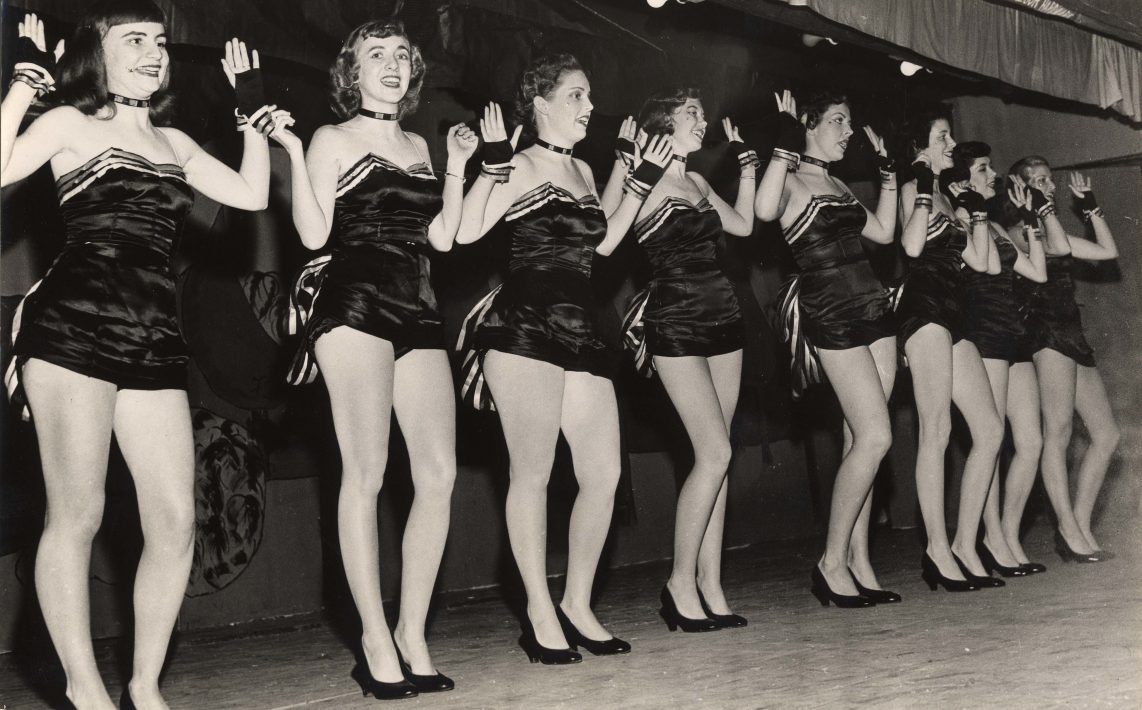
In this podcast, Jose and Rowan tackle the issue of the criminalization of sexual deviance. While there are many forms of sexual deviance, and likewise many methods of controlling this deviance, this podcast focuses primarily on anti-sodomy laws and anti-sex toy laws, specifically the Anti-Obscenity Enforcement Act that was passed in Alabama in 1998 and is still in effect today. This podcast explores the reasoning behind these laws, the forms of sexual deviance they seek to control through law, and the social implications of criminalizing sexual deviance (e.g., homosexuality).
My name is Jose Alfonso Mendez and I am currently a third-year at Grinnell College majoring in Political Science and History. I am from Mission Hills, California and I am a first-generation college student from a Mexican heritage. I aspire to attend law school and become more involved in social justice engagement and representation.
Rowan Queathem is graduating from Grinnell College in May 2017 with a B.A. in Religious Studies, and will move to Berkeley, CA in the fall to start at the Pacific School of Religion in their Master of Theological Studies and Certificate of Sexuality and Religion programs. Their main focuses of study are queer theology (especially around trans issues) and biblical interpretation (mostly the Hebrew Bible).
Credits: Thank you so much to Professor Lewis for her advice and guidance, Gina Donovan for technical assistance, and the various students and staff members who we interviewed for our podcast.
Bibliography:
Alabama Sex Toy Drive-Thru Business on the Rise.” CBS News. December 30, 2010. Accessed May 16, 2017. http://www.cbsnews.com/news/alabama-sex-toy-drive-thru-business-on-the-rise/.
Bernstein, Elizabeth, and Laurie Schaffner. Regulating sex: the politics of intimacy and identity. New York: Routledge, 2005.
Brents, Barbara G., Kathryn Hausbeck, and Crystal A. Jackson. The state of sex: tourism, sex, and sin in the new American heartland. New York, N.Y. ; London: Routledge, 2010.
Bryant, Clifton D. Deviant behavior: Occupational and organizational bases. Rand McNally College Publishing Company, 1974.
Chazan, Alana. “Good Vibrations: Liberating Sexuality from the Commercial Regulation of Sexual Devices.” Texas Journal of Women and the Law, 2009.
“Constitutional Law. Substantive Due Process. Eleventh Circuit Upholds Alabama Statute Banning Sale of Sex Toys. Williams v. Attorney General, 378 F.3d 1232 (11th Cir. 2004).” Harvard Law Review 118, no. 2 (2004): 802. doi:10.2307/4093397.
Gagnon, J. H., and W. Simon. “Sexual Deviance in Contemporary America.” The Annals of the American Academy of Political and Social Science 376, no. 1 (March 1968): 106-22. doi:10.1177/000271626837600111.
Glover, Richard. “Can’t Buy a Thrill: Substantive Due Process, Equal Protection, and Criminalizing Sex Toys.” The Journal of Criminal Law and Criminology 100, no. 2 (2010): 555-98.
“Lawrence v. Texas.” Lambda Legal. January 16, 2003. Accessed May 16, 2017. http://www.lambdalegal.org/in-court/cases/lawrence-v-texas.
Maines, Rachel. The technology of orgasm: “hysteria,” the vibrator, and women’s sexual satisfaction. Baltimore, MD: Johns Hopkins University Press, 2001.
Maris, Ronald W. “Deviance as Therapy: The Paradox of the Self-Destructive Female.” Journal of Health and Social Behavior 12, no. 2 (June 1971): 113-24.
Reiss, Ira L. “Premarital Sex as Deviant Behavior: An Application of Current Approaches to Deviance.” American Sociological Review 35, no. 1 (February 1970): 78. doi:10.2307/2093854.
Richards, David A. “The sodomy cases: Bowers v. Hardwick and Lawrence v. Texas.” Choice Reviews Online 47, no. 02 (2009). doi:10.5860/choice.47-1132.
Shrewsbury, J. F. D. “The Plague of the Philistines.” The Journal of Hygiene 47, no. 3 (November 1949): 244-52.
Sterne, Albert E. “Toxicity In Hysteria, Epilepsy And Neurasthenia—Relations And Treatment.” JAMA: The Journal of the American Medical Association XXVI, no. 4 (January 25, 1896): 172-74. doi:10.1001/jama.1896.02430560024002f.
Thompson, William E., and Alan J. Buttell. Sexual deviance in America. Emporia, Kan. (1200 Commercial St., Emporia 66801): School of Graduate and Professional Studies of the Emporia State University, 1984.
Transcript:
Rowan: Can you imagine being fined simply for buying or selling a sex toy? Can you imagine even being sent to jail? We are going to read you the text of a law. What year do you think this law was passed, and do you think it’s still on the books today?
Jose: “The Anti-Obscenity Law prohibits any person to knowingly distribute, possess with intent to distribute, or offer or agree to distribute any obscene material or any device designed or marketed as useful primarily for the stimulation of human genital organs for anything of pecuniary value. First-time offenders face a $10,000 fine and a year in prison, while repeat offenders can face up to 10 years in prison. Exceptions exist for bona fide medical, scientific, educational, legislative, judicial, or law enforcement purposes.”
Rowan: To find out what other folks on the Grinnell College campus think, we asked some students and staff to tell us when they thought this law was passed, and if they think it still exists.
Rowan: “So, like, what year do you think that would be from?”
Interviewee 1: “Um… 1980? I have no clue. I’m sorry.”
Rowan: “No, no worries, we’re just looking to see what people think based on the text of the law, ‘cause actually, that is still a law in Alabama. It is still illegal…”
Jose: “Yeah, apparently you can go to jail for buying sex toys.”
Jose: “When do you think this law was passed? Or if it was ever passed?”
Interviewee 2: “…I would say in the 1940s.”
Jose: “1940s. Okay.”
Interviewee 2: “I wasn’t born yet, but… sounds like something…”
[laughter]
Jose: “It makes sense, it makes sense. Uh, would you think that this law would still exist?”
Interviewee 2: “…Not knowingly.”
Jose: “Okay. Well, actually, this is a law passed in 1998 in Alabama that currently still is affecting people.”
Interviewee 2: “Really?”
Jose: “Yeah, like, people still go to jail for it.”
[laughter]
Interviewee 2: “That’s funny! Wow… No, I wouldn’t think that was still on the books.”
Jose: “Oh, yeah, definitely. Apparently it’s other states as well, but Alabama’s the first one to… that really made it concrete.”
[laughter]
Interviewee 2: “I’m very surprised.”
Jose: “What exactly are your reactions or opinions on an anti-sex toy law that penalizes people for a first-time offense around $10,000, and if it’s a repetitive offense, they face jail time?”
Interviewee 3: “I find it pretty ridiculous. And it—the idea that legislators would propose that is… I don’t know. It makes me laugh. I don’t know who would propose that. It’s like… I don’t know, banning toys for children. Teddy bears and dolls and trucks—I don’t know! Why would anyone do that? And how would they, I don’t know, regulate that? Are they gonna, I don’t know, be patrolling bedrooms and hotel rooms? College dorm rooms? I don’t want someone in my room.”
[laughter]
Interviewee 3: “Policemen? I don’t… Who’s going to volunteer to do that?”
[laughter]
Interviewee 3: “Self-reporting? I’m not gonna report that. But… it’s just utterly ridiculous.”
[laughter]
Rowan: Coming to you from Grinnell College, spring 2017, I’m Rowan Queathem.
Jose: And I’m Jose Mendez.
Rowan: Join us as we talk about the issue of sexual deviancy throughout American history, and, more specifically, how sexual deviancy has been criminalized throughout American history.
[funk music]
Jose: If such a law draws a dramatic response from people outside of its jurisdiction,, why does it continue to stand today? Why did it get passed in the first place and on what grounds? In order to answers these questions and understand the history that led up to this outrageous sex toy law, we must first tackle the issue sexual deviancy. And what better to understand the concept of sexual deviance than by talking about the origins of the vibrator and its start as a medical tool.
[Baroque recorder music]
Rowan: Physicians during the 19th century were facing the issue of their female patients feeling stressed and disappointed in their sex lives. In 1859, a physician named George Taylor claimed that a quarter of all women suffered from hysteria. According to the medical field at the time, hysteria was a medical disorder with symptoms that included faintness, nervousness, sexual desire, insomnia, fluid retention, heaviness in the abdomen, shortness of breath, irritability, loss of appetite for food or sex, and a “tendency to cause trouble.” Physicians thought that the stress associated with the typical female life at the time caused civilized women to be both more susceptible to nervous disorders and to develop faulty reproductive tracts. In order to solve this, physicians treated hysteria by masturbating female patients to orgasm. But physicians thought of this as too difficult to achieve and a waste of their precious time that they were forced to come up with a solution, that being the vibrator. No long would physicians be burdened by the need to pleasure their patients in order to “cure” their hysteria. And what a relief, men in the household no longer had to feel terrible about themselves for not pleasuring their partners. The vibrator was a win win for physicians and sex partners throughout the U.S.
Jose: But with the passage of time, vibrators went from being classified as a medical tool to a highly controversial and embarrassing sex toy. This shouldn’t be seen as a surprise seeing that sexuality in American history was centered around straight males. Obviously, accounts of American’s use of a vibrator and other sex toys became very deviant. Unfortunately, sex toys were not the only topic that were seen as sexually deviant, as the 20th century brought enforced laws that labeled homosexuality as dangerously deviant and at times illegal.
The year was 1986 when the U.S. Supreme Court upheld, in a 5–4 ruling, the constitutionality of a Georgia sodomy law criminalizing oral and anal sex between consenting adults. Interestingly enough, their ruling did not differentiate between homosexual sodomy and heterosexual sodomy. As a result of this supposed mistake, anti-sodomy laws only targeted homosexual partners and gave straight couples a free pass to do whatever they wanted. What makes this ruling worse is the justification and reasoning used by the justices for their decision, referring to abstract heteronormative principles, citing the “ancient roots” of prohibitions against homosexual sex, and even going as far as Justice William Blackstone’s description of homosexual sex as an “infamous crime against nature”, worse than rape, and “a crime not fit to be named.” Obviously, the Court’s ruling would give passage for other states in the U.S. to pass laws against homosexuality and other acts that were deemed too deviant.
Rowan: The criminalization of sodomy and the history of hysteria and anti-sex toy laws may seem, at first glance, to be entirely unconnected. However, the common theme here is the pathologization and criminalization of sexual deviance. Sexual deviance threatened the social order—namely, the standard of the monogamous, heterosexual, patriarchal nuclear family—and thus needed to be restricted by any means necessary. Clearly, however, justifying and enforcing laws that try to regulate what goes on behind closed bedroom doors is no easy task. In Lawrence v. Texas, 2003, the Supreme Court overturned Texas’s law that banned sodomy, but just one year later, the 11th circuit court allowed Alabama’s controversial anti-sex toy law to stand. Why? Essentially, the court decided that there was no Constitutional basis for the argument that people had the right to use sex toys. The law still stands today. Naturally, some people were frustrated and confused by Alabama’s strange and intimate ban.
Neil Rogers: “Better lock away your pocket rocket because the pocket rocket police are coming. If it’s in Alabama now, it won’t be long before it seeps down here to Florida, down the penis-ula. Those challenging the 1998 law contend it violates privacy rights by indirectly prohibiting adults from engaging in legal acts behind closed doors. But the state contends that there is no fundamental right to a product used to produce an orgasm. Oh my god! OH MY GOD!! How ‘bout a carrot? How ‘bout a [inaudible] Weiner?”
Other voice: “Zucchini.”
Neil Rogers: “How ‘bout a zucchini? How ‘bout a goddamn eggplant? Well. How ‘bout a cucumber? How ‘bout a kosher dill?”
Rowan: That was Neil Rogers, speaking on the radio in February 1999 about Alabama’s sex toy ban, a year after the law was passed. Originally, eight states had such bans, but most of them were overturned by various courts either due to a lack of consideration for the right to privacy or the right to free speech. Anti-sodomy laws were also declared unconstitutional by the Supreme Court in 2003. However, Alabama’s anti-sex toy law still stands. These laws are clearly difficult to legally justify, and perhaps even more difficult to enforce. As one of our interviewees pointed out earlier:
Interviewee: “Who’s going to volunteer to do that?” [laughter]
Jose: Before these anti-sodomy and anti-sex toy laws were reversed, many people suffered from these outrageous laws. One example can be seen in Texas, where in 2004, a saleswoman by the name Joanne Webb was arrested by undercover investigators for selling sex toys. Joanne Webb was making a living by toting her plastic products from house to house for little get-togethers with women interested in making their everyday lives better and easier. Unfortunately, two of her clients were undercover investigators and charged her with intent of selling obscene products and faced a year in prison and a $4,000 fine if convicted. Joanne is one of many individuals impacted by these ridiculous laws.
Jose: Fortunately, some folks have figured out how to slip through the law’s various loopholes. In 2010, CBS reported on a drive-through sex toy store called Pleasures, which provides its particular form of contraband to customers who are having some sort of trouble with their sex lives, making use of the medical use loophole.
Rowan: However, the fact that people need to make use of these loopholes at all is troubling. For a law like this to still be on the books in the year 2017 is a little bit ridiculous. Most people we interviewed could barely believe it when we told them that Alabama’s anti-obscenity law is still standing today. Generally, we like to think that social progress happens in a linear way, but in fact there are still pockets of conservatism around the U.S. that hold us back. While our society is making progress toward being more, well, progressive, on the whole, not everyone is on the same page.
[funk music]
Rowan: As Grinnellians, a lot of these issues might seem pretty far from home, but in fact the systematic, politically motivated control of sexual deviance impacts students on our campus every day. Just recently, Central Iowa Family Planning shut down its locations in both Grinnell and Marshalltown, leaving many students with no local options for reproductive health care. For some of these students, driving out to Des Moines or Iowa City is an option, but for others who may not have access to a car or are too busy with their classes, they are simply left without resources.
Jose: Central Iowa Family Planning closed because of issues with funding, issues that were caused by conservative political agendas in the state legislature. On the national level, the rights of women and queer folks are under attack from the right, in the form of loss of funding for reproductive health services and Donald Trump’s recent “religious freedom” executive order, whose stated purpose is to protect the rights of religious people in the U.S. but in practice will give businesses, landlords, health care providers, and others the option of openly discriminating against LGBTQAI+ Americans with no penalty whatsoever. If we understand the history around criminalizing sexual deviance, we can be better prepared to work toward a future that is more socially just and sexually liberal.
Rowan: Thank you for joining us today to talk about such a fun, strange, and intimate topic—criminalizing what goes on behind closed bedroom doors. The history of sexuality in America is incredibly complex. Issues of sexual deviance and social control are impacted by a variety of factors—race, class, sexuality, gender identity, social class, and many others. Today, we covered just a small amount of the history of sexuality in America. We encourage our listeners to do more research. Listen to other podcasts, do some reading, watch some movies, look at old archives of drag magazines and personal ads on the Internet. Thinking about historical figures as sexual beings can help to humanize them in our own eyes as we look backward in time.
[funk music]
