
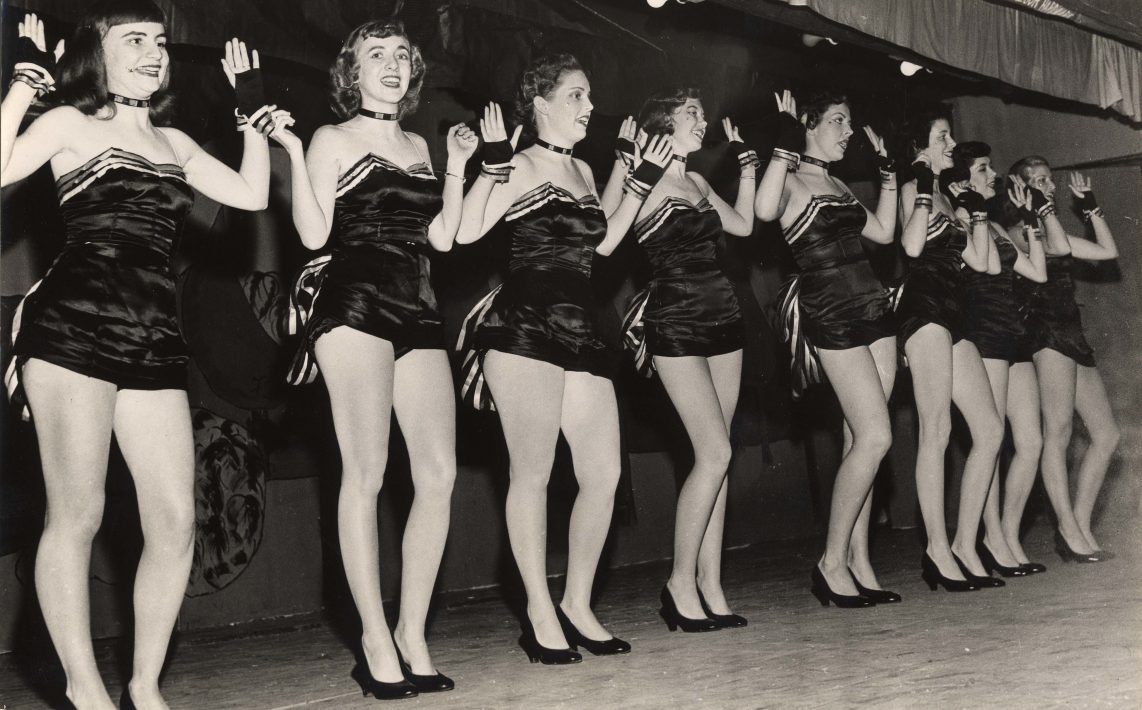
For our long podcast, we looked at the history of love letters by addressing several subtopics. We used these subtopics to demonstrate why love letters are an important part of history. First, we talked about how letters are a unique source because they detailed intimacy that was not publically seen. We analyzed excerpts from love letters that were intended to be private and trace the history of these letters in chronological order. We also discussed how love letters were used to express desire from a distance. Our specific examples showed how the letters conveyed sexual desire. Several of our other sources, like the ones from Lystra and Coffin, described how love letters reveal a lot about American culture during specific time periods. In four segments, we chose the most interesting letters and secondary sources to show how love letters from history dispel normative readings of desire and sexuality. Our sources include famous American politicians, slaves, soldiers in the revolutionary war, and everyday citizens at various points in history. Because our sources span a significant period of time (13th to 20th century) we are able to discuss how love letters have transformed or remained the same over time within these subtopics.
Podcaster Bios
Lila Hazel Cardozo is a GWSS and Biology double major from New York City. She has a younger sister named Ruby, an even younger brother named Jude and the youngest member of her family is their rabbit named Heather. Her hobbies include playing soccer and surrounding myself with the color purple. In her free time, she really enjoys trying new foods with her friends, spending time in Central Park and writing about her experiences.
Alayna Costner is a Psychology major and Neuroscience concentrator who hails from midwestern Illinois. Her hobbies include obsessing over dogs, advocating for mental health, watching Netflix, and cooking.
Sidney Litke, is a Political Science major and Policy Studies concentrator from Wisconsin. She enjoys reading, taking photos, playing volleyball and softball, talking politics, and watching Netflix.
Niya Weedon is a graduating senior Theater and Dance major at Grinnell College from Washington DC. She recently successfully directed a main stage production at the College. She is the oldest of two with a five-year-old younger brother and enjoys old school hip-hop and jazz music. She is excited to start working in the artistic world outside of Grinnell and continue her Doula certification process.
Acknowledgments
Special thanks to our professor Carolyn Lewis for giving us the platform for creating this project, Gina Donovan for giving technical support and advice, to Alayna for editing, all the people that were interviewed and agreed to have their opinions on love letters shared, the AV center for equipment, http://www.purple-planet.com for music, the HIS-224 class for peer review, and all the hopeless romantics who still use a pen and paper to spread love.
Bibliography
Primary Sources:
Brookhiser, Richard. “A Love Letter from Alexander Hamilton to His “Nut-Brown Maid.” OAH Magazine of History 18, no. 4. (2004): 49-52.
“July-December 1929.” In The Letters of Vita Sackville-West and Virginia Woolf, edited by Mitchell Leaska and Louise DeSalvo, 338-56. San Francisco, CA: Cleis Press, 1984.
“Send Her My Love: Letters from World War II.” Digital image. Published 2011.
Triman, Eugene. “Eugene and Margaret Triman papers.” From the David M. Rubenstein Rare Book & Manuscript Library. 1944-1946
Secondary Sources:
Albertine, Susan. “Heart’s Expression: The Middle-Class Language of Love in Late Nineteenth-Century Correspondence.” American Literary History, vol. 4, no. 1, 1992, pp. 141–164. JSTOR, JSTOR.
Campbell, Randolph B., and Donald K. Pickens. “”My Dear Husband”: A Texas Slave’s Love Letter, 1862.” The Journal of Negro History 65, no. 4 (1980): 361-64.
Coffin, Judith G. “Sex, Love, and Letters: Writing Simone De Beauvoir, 1949—1963.” The American Historical Review 115, no. 4 (2010): 1061-088.
Jolly, Margaretta. In Love and Struggle: Letters in Contemporary Feminism. New York: Columbia University Press, 2008.
Kolodny, Annette. The lay of the land: metaphor as experience and history in American life and letters. Footprint Books, 2011.
Lystra, Karen. “The Pen is the Tongue of the Absent: Reading and Writing Nineteenth-Century Love Letters.” Searching The Heart: Women, Men, and Romantic Love in Nineteenth-Century America. New York. Oxford University Press. 1989.
Newman, Barbara. “Making Love in the Twelfth Century: An Essay in the History of Emotions.” In Making Love in the Twelfth Century: “Letters of Two Lovers” in Context, 3-41. University of Pennsylvania Press, 2016.
Person, Leland S. “Hawthorne’s Love Letters: Writing and Relationship.” American Literature 59, no. 2 (1987): 211-27. doi:10.2307/2927041.
Rosenwein, Barbara H. Worrying about Emotions in History. The American Historical Review. Vol. 107, no. 3, 2002, pp. 821-45.
Rupp, Leila J. A Desired Past: A Short History of Same-sex Love in America. Chicago: University of Chicago Press, 1999.
Schuetze, Sarah. “Carrying Home the Enemy: Smallpox and Revolution in American Love and Letters, 1775–76.” Early American Literature 53, no. 1 (2018): 97-125.
Smith-Rosenberg, Carroll. “The Female World of Love and Ritual: Relations between Women in Nineteenth-Century America.” Signs, vol. 1, no. 1, 1975, pp. 1–29
TRANSCRIPT
Sidney: In your own words, how would you define a love letter?
Respondent: It’s probably just like when someone tells you they have feelings for you doesn’t have to be like “I love you, let’s get married” but like anything.
Theme Music
Sidney: Hello podcasters! Welcome back to Sex throughout History. We are broadcasting from our new location in the Alumni Recitation Hall at Grinnell College. It is May 3rd, 2018 and with us as always is Niya, Lila, Sidney, and our fearless editor Alayna. If you were paying attention a few seconds ago, you can hear the topic for today’s podcast – love letters!
Lila: Wait, love letters? Seriously? Who even gets love letters anymore?
Niya: I just got one last month!
Sidney: I got one once in second grade and things were pretty serious.
Niya: Love letters are sweet and they serve specific purposes in many different contexts.
Sidney: Niya is right. Love letters, while may be viewed as “cheesy” by some, play a large role in people’s lives today and have throughout history.
Niya: What even is a love letter?
Sidney: A love letter is a romantic way to express feelings of love in written form. Whether delivered by hand, mail, carrier pigeon, or romantically left in a secret location, the letter may be anything from a short and simple message of love to a lengthy explanation of feelings.
Sidney: Today, however, we will be focusing on romantic love letters that have been sent throughout history, the people who were sending them, who they were being sent to, and why both parties used letters to express romantic desire.
Niya: If you were listening to the beginning of the podcast, you may have heard a new segment we are introducing. We started polling people on the streets of Grinnell College about what love letters are and what they mean to them individually. Take a listen to a few more responses.
Swoosh
Sidney: How were love letters used throughout history?
Respondent: They were used to express their affection and desire for one another through the years by people in relationships.
Swoosh
Lila: Everyone seems to have a differing view of love letters.
Sidney: I think that has do with the evolution of love letters and technology, something we will talk about later in the podcast.
Lila: In this podcast, we will explore love letters and their evolution throughout history. Starting in the 13th century, we look at how love letters expressed passion and desire despite societal barriers. Then, we will move into modern day love letters and what their function is and if they even exist today.
Transition Music
Lila: So, how do love letters fit into a study of history?
Niya: Well, the function that the letters serve overall is not all that basic. The letters help us define what love, sadness and joy meant in different time periods.
Sidney: Wait, haven’t these emotions always stayed the same? How could they change with time?
Niya: Think about it this way, if we think when we feel and the way we think is influenced by the institutions and political atmosphere around us, feelings change as society does. At least by this logic, emotions would change with the time period.
Lila: I’m sure these emotions in the love letters revealed a lot that other sources might have left out.
Niya: Of course. Among other things, the hidden love and lust is not so hidden in the letters. Also, there weren’t restrictions on expressing your sexuality in this private, intimate way. Historians are able to find accounts of same-sex relationships, for example, during this time period where public expressions of intimacy were restricted.
Sidney: In an article by Leila Rupp, they talk about how when the physical is not acceptable or understood in the same way it is now, so love was expressed verbally and in writing. For example, a simple hand hold or having your ankle exposed was interpreted differently from one time period to another.
Lila: So, what you’re getting at is letters were used as a way to mask social deviance?
Niya: In some respects, yes. The only relationships that were allowed in early modern history were heterosexual, and they were often very restricted in how they could display affection for one another.
Sidney: For example, in the 12th century making love was not a pleasant idea in the presence of a third person.
Lila: That seems pretty voyeuristic, I think a lot of people today would say the same thing.
Niya: This is true if we are thinking about making love as a physical action but from the 1600s-1920s making love with a person was understood more as a declaration. Eavesdropping ears could possibly hear any verbal exchange of passion. And bedroom life was to be kept very private.
Lila: So love letters must have been pretty popular.
Sidney: Not exactly, due to the time period epistolography, or the art of writing letters, the people most capable of writing letters were priests, monks, and nuns and writing love letters would be going against their ethics.
Lila: So, when did love letters become more popular?
Niya: As writing became a craft so did poetry, and some of the oldest examples of love letters were written in the form of poetry
Sidney: There is also a large switch when the need for letters changed, like in the case of smallpox where you actually could not be close to the ones you loved in fear of passing the disease. During this revolutionary time in America, smallpox had the potential to revolutionize domestic life.
Niya: If a husband in service to the Revolution gained exposure and subsequent immunity to smallpox, it was feared that he could “carry home” the disease, either intentionally or accidentally, infecting and potentially killing his wife. This immunity also made it so that the rest of the family, wife and children were more likely to suffer.
Lila: As a result, many men must have had to engage in their family from afar in hopes of protecting their health.
Transition Music
Sidney: So, we know now what a love letter is, but what else causes people to write love letters? Why were they ultimately necessary?
Lila: Well, one reason was the ability of letters to extend conversation over distance and time. In the 18th and 19th centuries, it wasn’t uncommon for lovers to be split up because of war or jobs. In a pre-electricity era, letters would have been the only way to communicate.
Niya: That’s true. A good example is a letter written in 1862 to Norfleet, a Texas slave who had been forced to be a servant for a Civil War general. His wife wrote him, describing how much she missed him by saying:
[Piano playing in the back] I haven’t forgot you nor I never will forget you as long as the world stands, even if you forget me. My love is just as great as it was the first night I married you, and I hope it will be so with you.
Sidney: Wow, it sounds like she was really struggling with being away from her husband. So I guess, what would people do if their lover wasn’t responding?
Niya: Well, there were rules for corresponding with those you were close with. It was best to write at least once a week. If you didn’t, the person writing to you was not afraid to tell you so. For example, in one letter from Alexander Hamilton to Elizabeth Schuyler, after expressing how much he missed her, he said:
[Piano playing in the back] Indeed my Dear Betsey you do not write to me often enough. I ought at least to hear from you by every post and your last letter is as old as the middle of September.
Lila: We would read more, but the letter gets rather… explicit. That was another way to deal with frustration of not hearing back. It was common to anthropomorphize letters. Lovers would act as though the physical letter was the other person. The reader would even talk to the letter itself while reading it. All this usually required partners to write very intimately.
Sidney: That’s right. Lovers felt a need to express their feelings, but during this time period, there was a very clear division between public and private life which was not to be crossed. That meant that love letters were deeply rooted in the private sphere.
Niya: Besides only being read by the other person, how were love letters private?
Lila: It was all about what was in the letter. The writer would often express detailed emotional states. In fact, people believed that that’s what you were supposed to do. It was proper etiquette to be sincere and personal. This made both writing and reading letters intimate experiences. From the first to the very last words, letters were seen as personal expressions of intimacy.
Sidney: Exactly. One interesting thing that scholars have looked at is the evolution of closing statements. At the beginning of a relationship, one may have written “I am reliably yours.” However, as the relationship grew stronger, the ending would become more extravagant and personal. One letter closed with “Darling, darling darling, Oh! How I love you!! I want to maul you. Goodbye sweetie, Yours Forever.”
Niya: Wow, that is some pretty intense love.
Transition Music
Niya: Lila, how would you define a good love letter?
Lila: Well, at least throughout the late 19th century, the best love letters emphasized the aesthetic quality of the writing.
Sidney: Why would the quality of your writing effect how good it is?
Lila: It was a difficult task, but the goal was to make the reader feel like the other person was physically there. If you were a good enough writer to convey a vivid image to the recipient, this certainly worked to your advantage!
Niya: Wow. What else made a love letter of this time most interesting?
Sidney: From a scholarship point of view, these letters were sources that would often break “the restraints of social order.” According to Susan Albertine, lovers of the 1800s wanted to know each other so intimately, that the self they portrayed was stripped of social influence.
Lila: Yeah, the letters have the ability to present a unique perspective, specifically during the Victorian era, when gender roles were widely known to be very specific and strict.
Niya: Let’s take a look at a letter that both addresses factors outside the social expectations of the time period and put emphasis on the desire to be physically close.
Sidney: Vita Sackville-West wrote this letter addressed to Virginia Woolf in 1925. The letter was written right after the two women stayed together at Long Barn and their love affair began.
Lila: It reads:
[Piano playing in the back] Virginia, dear and lovely. I shall be oh so glad to see you again. So glad that it makes me incapable of writing to you now. I must write you a long letter or else a note saying I will come to lunch.
Damn you then Vita, why not let it be the long letter?
Niya: They are certainly not casual letters. Vita put effort into this letter to convey her honest emotions. Her desire to be physically close to Virginia again is made very clear.
Sidney: And, it’s also clear by their exchanges that Vita’s writing achieved its goal. The two have a whole book of letters written to each other. So, Vita’s ability to write raw and sweet letters would have functioned like a sexual advantage during this time.
Lila: And, I’m sure, bad writing would make you less appealing to your lover.
Sidney: I am sure stylish letters were not always expressions of love. What might have been some exceptions?
Lila: Well one interesting character was Nathaniel Hawthorne, an American novelist born in 1804 in Salem, Massachusetts. He wrote several letters to his wife Sophia Peabody, but his real objective was not to woo her.
Niya: Then why did he write so many letters?
Sidney: Leland Person explained that, “Hawthorne tested the limits of conventional discourse: the power of words to express what was obviously an emotional and sexual awakening.” In other words, he was using his letters as a way of exploring, and maybe even experimenting, on the intimate ties between writing and relationship.
Niya: What a couple. Wow.
Transition music
Sidney: As history progressed and times began to change, love letters began to serve a more meaningful purpose. With the outbreak of wars in the beginning of the 20th century, love letters were sometimes the last conversations people would have with those they loved who were serving abroad.
Lila: During times of war, the amount of letters coming in and out of the United States became so large, they had to institute what they called, Victory mail. V-Mail was the U.S. army’s answer to the enormous volume of mail during the war. To save on bulk and weight, they micro-filmed the letters and sent copies of the letters instead of the original
Niya: If these letters were being opened, weren’t people afraid of other people reading what they wrote?
Sidney: In some cases yes. V-Mail was also created in order to keep soldiers from revealing military strategies and also their locations. While people still wrote love letters, there were limits to what they felt comfortable saying.
Lila: In an interview for a collection of letters exchanged during WWII, A.J., the wife of a soldier once told her kids, “He told as much as he could in the V-mail, but he had to be careful. Everything was censored in and out of the country. You had to be very casual in what you were saying”
Sidney: Here is an excerpt of a letter AJ got from her partner Mitch during WWII:
[Piano in the back] Dearest AJ, Somewhere in Italy. I liked the paragraph in which you said how much you missed me. That is the way I want you to feel, but I hope we won’t have to feel that way for too long. Honey, Send a few snapshots of yourself. If you don’t have any, have some taken. Have them about the size that would fit into a cigarette case, that would be carried with me. Will close honey until tomorrow. All yours. Love, Mitch.
Lila: From this letter, we see that expressions of passion and desire were a lot different than those of previous letters we read. These people “kept it PG”, as some might say.
Niya: After the war, love letter writing became a greater challenge. People had more difficulty articulating how they felt in letters during a time when technology was on the rise.
Lila: To address this shift, Jolly, in a chapter of her book writes, “Seduction is, by nature, a literary challenge. Those who write to a lover wrestle with words’ inadequacy, exaggerating the awareness in all writing of physical absence. At the same time, of all genres, love letters most obviously demonstrate writing’s ability to arouse, to prolong, and even, especially in paper form, to fetishize desire.”
Sidney: Especially during the sexual revolution and changing times in the late 1900s, love letters became less of a necessity as social norms began changing, making things like homosexuality more socially acceptable and displays of affection the norm.
Lila: At the end of her book, Jolly argues that within love letters, there is a certain unreliability about them as time has evolved – especially in the technology era we currently live in.
Transition Music
Niya: As Lila was mentioning in the last segment, love letters have greatly evolved as technology has gotten more advanced. With the development of the internet and computers became more accessible, emails began to replace letters.
Lila: While emails may not be as “pretty” or “literary works of genius”, they still hold an important role in the evolution of the love letter.
Sidney: “Email has seduced people into life writing, into the pleasures and demands of composition for another. It has also spawned a popular aesthetic in which writing’s ability to deceive and disappoint as well as delight is a central feature”, Jolly writes. Email was just the beginning. As the internet began to go portable with smartphones, new mediums appeared for expressing your feelings.
Lila: While emails are faster than love letters, they still have a similar set of rules and etiquette for replying to the message. Those rules include:
Swoosh
Lila: You shouldn’t email more than once a day.
Sidney: Remember that email should be somewhat appropriate. Email hacking happens a lot more then we realize.
Niya: And also, if you send an email in the middle of the night, no one is going to be there to read it.
Swoosh
Niya: These rules apply to other forms of technology as well. For example, you shouldn’t “double text” a person too quickly or else they will get a bad impression of you. With the introduction of texting and social media platforms like Snapchat, Twitter, Instagram, expressing one’s feelings became a lot easier.
Lila: The new generation of social media has created an environment in which a comment on Instagram or a funny meme DM from a crush is the modern equivalent of someone writing you a love letter in previous eras.
Sidney: Technology is also taking away people’s ability to communicate face to face. Hiding behind a screen is a perfect place for people to expose their feelings because it is low risk. Revealing your feelings to someone in person makes you more vulnerable and then you might face rejection head on.
Lila: But didn’t love letters provide that same sense of security?
Niya: Not necessarily. Love letters had to be personal to win someone over. The letters were used to try win the heart of the reader, not just to get the attention of the reader. Plus, they were handwritten. I don’t think you can get as personal as that without being face to face with another person.
So, I guess the last question is: what is better, a nice text, a DM, a Snapchat, an Instagram post, or an actual love letter?
Sidney: I mean, I guess thinking about it, like getting a nice DM or Facebook message of like a cute puppy video here and there is really nice. But like, if the letter came from someone I cared about and they cared about me, and they weren’t some random creepy person, I think I would be really into getting a love letter.
Lila: Yeah, I think a love letter definitely catches a person’s attention today as opposed to a text or a DM…so for anyone listening if you really want to catch somebody’s attention, a letter is the way to go.
Niya: So, I think the obvious answer is a love letter.
Lila: That’s all the time we have for today.
Sidney: Thank you for tuning into Sex throughout History. If you want us to talk more about love letters or have any questions about things that were featured in the podcast, write us a love letter expressing your love for the podcast and your questions.
Theme Music plays
Niya: [Music continues behind] Special thank you to Professor Lewis for her support throughout this process and project, Gina Donovan for her tech insight, all our interview respondents, and all those who gave us feedback about the podcast.
